Draft vs. Cans: Which Beverage Format Makes More Sense for Your Event?
When you're planning a large event, beverage service might feel like a logistical afterthought — but the format you choose can have a significant impact on your bottom line, your guest experience, and how smoothly your operation runs on the day. Here's what you need to know about the draft vs. cans debate.
The Case for Cans
Canned beverages have a lot going for them on the surface. They're easy to source, straightforward to store, and require minimal equipment to serve. For small private events or situations where simplicity is the priority, cans can absolutely get the job done.
But scale changes the math significantly.
At festivals, sporting events, or any gathering with a few hundred guests or more, cans introduce a set of challenges that are easy to underestimate. Staff spend time cracking cans rather than serving guests, lineups grow, and waste accumulates fast — both in the form of partially consumed cans and the sheer volume of recycling to manage. Per-unit cost is also higher. When you're buying by the case, you're paying a retail-adjacent price for every single drink served, whether it gets finished or not.
Why Draft Wins at Scale
Draft beverage service — kegs served through tapped systems — flips most of those disadvantages on their head.
The economics are straightforward. Kegs consistently offer a lower cost-per-ounce than canned equivalents. For a high-volume event, that gap adds up quickly. More volume served at lower input cost means more revenue retained, whether you're running a licensed beer garden or managing a private bar.
Speed of service improves. A well-run tapped bar can serve drinks significantly faster than a can-cracking operation. Faster service means shorter lines, happier guests, and more transactions completed per hour.
Waste drops. With a canned format, waste is baked in — opened cans that don't get finished, over-poured cups, inventory that doesn't move. A properly calibrated draft system dispenses a consistent, predetermined volume every single pour. Nothing more, nothing less.
The Wastage Problem (And How We Solve It)
Waste is the silent killer of beverage garden profitability. It shows up in foam, over-pours, spilled drinks, and kegs that kick before the event ends because inventory wasn't tracked properly.
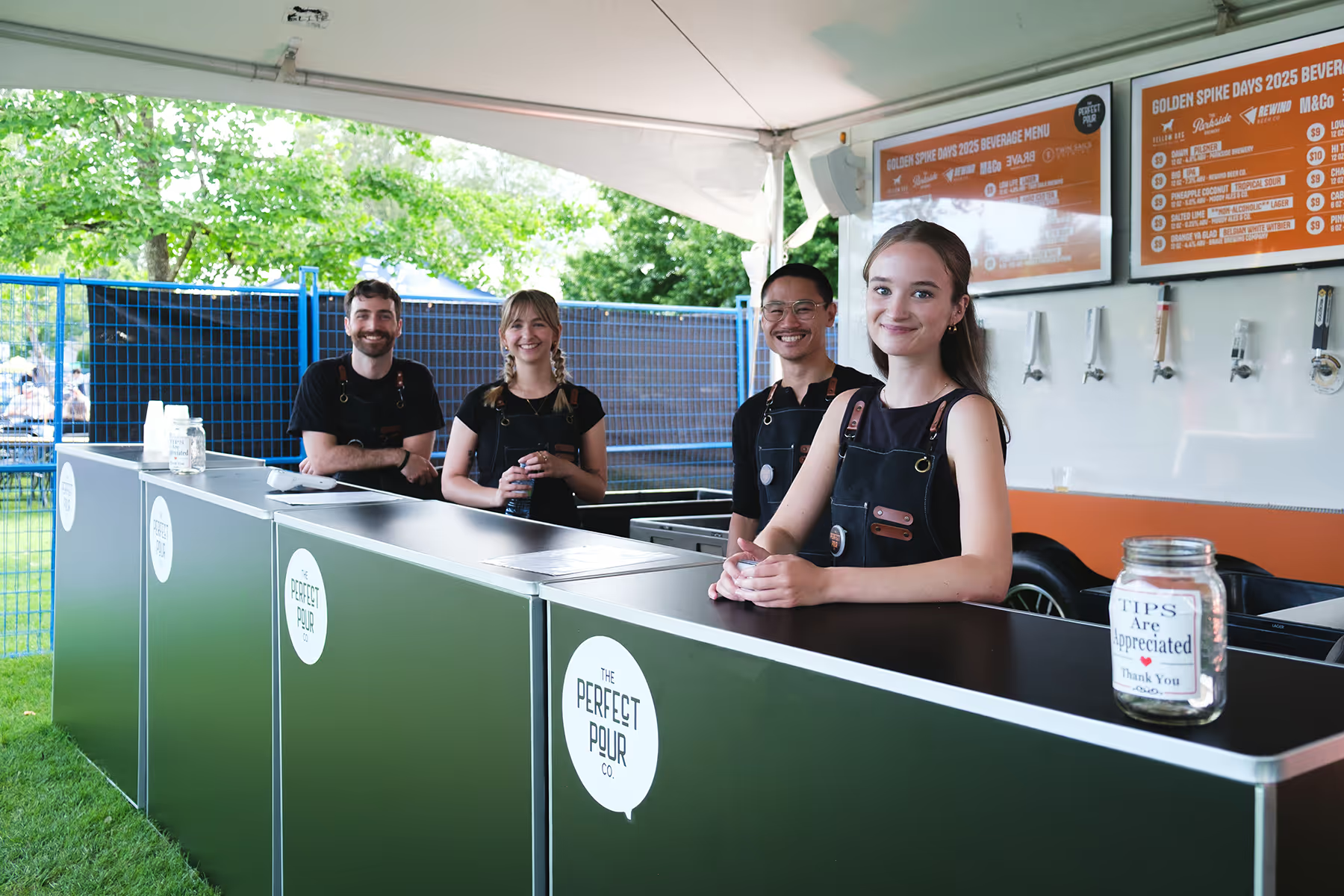
At The Perfect Pour Co., our SmartTap technology is built specifically to address this. Every tap is digitally controlled to dispense a pre-set volume on every pour — eliminating the variability that comes with manual service. We also capture real-time sales data throughout your event, giving you a live picture of what's moving and what isn't.
That data doesn't just help on the day. After your event, we provide a full breakdown of beverage sales so you can make smarter purchasing decisions next time — ordering closer to actual demand rather than guessing and over-buying.
What This Means for Your Event Budget
Here's a simplified way to think about it. Say you're expecting 1,000 guests and projecting 2,000 drinks served over the course of your event.
With cans, your per-unit cost is fixed and higher, waste is unpredictable, and service speed has a ceiling.
With draft, your per-ounce cost is lower, waste is controlled through precision dispensing, and service throughput is higher — meaning you can serve more guests in the same amount of time with the same number of staff.
For most events at scale, the switch from cans to draft isn't just a logistical choice. It's a revenue decision.
The Bottom Line
Cans have their place. But if you're running a beer garden, festival bar, or any licensed beverage operation with significant volume, draft service consistently outperforms on cost, speed, and waste control.
Our turn-key tapped trailer systems are designed to make that transition as simple as possible — no equipment sourcing headaches, no staffing gaps, no guesswork on inventory. Just a cleaner, more profitable beverage operation from setup to last call.
Thinking about your next event? Get in touch with our team and we'll walk you through what a Perfect Pour setup would look like for your specific event.